

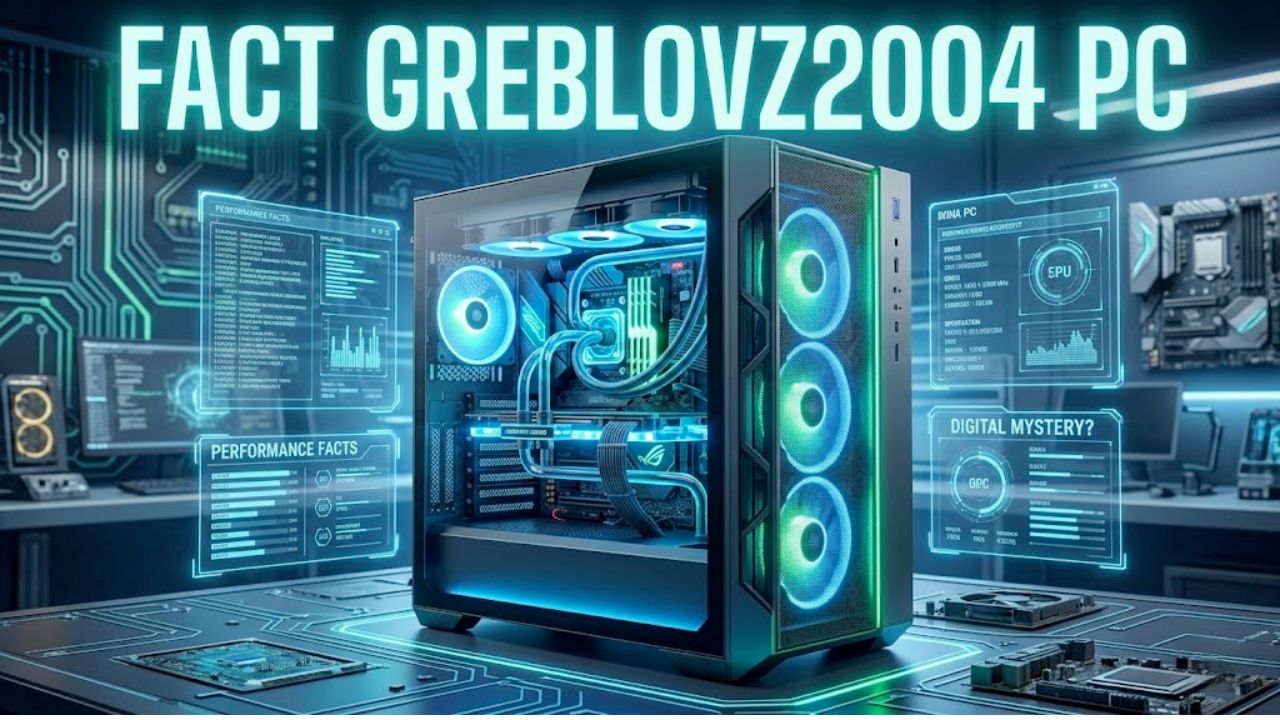
When you suddenly notice a strange label like “Fact_Greblovz2004_PC” on your computer, it’s hard not to feel a little jolt of fear—Is this a virus, a hacker, or some broken software? Honestly, you’re not alone in that reaction. In reality, most evidence so far shows that “Fact Greblovz2004 PC” is usually just a user‑created label or a marketing name tied to the broader Greblovz2004 gaming ecosystem, not an official Windows component or a confirmed malware strain.
In this guide, we’ll unpack what the phrase actually means, where it tends to show up, how safe it is, and what to do if you see it on your own system—whether it’s a mystery folder on an old hard drive or the name of a prebuilt “Greblovz2004” gaming rig you just bought. Along the way, we’ll anchor everything in current security and gaming data so you’re making decisions based on reality, not rumors.
What “Fact Greblovz2004 PC” Actually Is
Across the top search results, there are two main interpretations of “Fact Greblovz2004 PC”:
-
Some tech explainers describe it as a custom label or identifier used by an individual, often seen in system logs, backup folders, or custom gaming setups, not as official software.
-
Other sites present “Fact Greblovz2004 PC” as the name of a preconfigured gaming computer built for the Greblovz2004 gaming platform, with beginner, mid‑range, and high‑end variants.
One detailed breakdown notes that the term isn’t recognized as a mainstream operating system component and is more likely a user‑generated tag attached to obscure filenames, archived folders, or personal projects. Another article frames it as a branded PC “specially configured to give you the best experience on the Greblovz2004 gaming platform,” complete with model tiers and setup steps.
A news‑style piece goes even further and states directly that “Fact Greblovz2004 PC” looks like a trending digital phrase rather than a confirmed, standardized product or official system file—basically, something that caught fire online before anyone clearly defined it.
So, in plain language:
-
It’s not an official Windows feature or widely documented vendor product.
-
It’s usually either a custom label (old logs, backup folders, usernames) or a marketing / community name for a Greblovz2004‑focused gaming rig.
Why This Weird Name Is Trending Now
If you feel like “Fact Greblovz2004 PC” came out of nowhere in 2025–2026, you’re not imagining it. It’s surfacing at the same time as:
-
Steady growth in PC gaming: Newzoo’s 2024 Global Games Market Report projects PC game revenues of about 43.2 billion dollars, making PC the smallest but fastest‑growing segment that year, up roughly 4 percent year on year.
-
A huge, still‑growing base of Windows desktops: StatCounter’s February 2026 snapshot shows Windows 11 at about 72.78 percent of desktop Windows usage and Windows 10 at 26.27 percent, with older versions barely present.
-
Intensifying malware and cyber threats: A 2025 malware trends report by ANY.RUN recorded over 1.87 billion indicators of compromise (IOCs) in 2024—almost triple the prior year—highlighting how noisy and confusing the security landscape has become.
In a world where most PCs run Windows and PC gaming alone accounts for tens of billions in revenue, strange filenames and marketing labels spread fast through forums, mod sites, and grey‑area download portals. That’s exactly the kind of environment where something like “Fact Greblovz2004 PC” can trend before anyone agrees on a single, official meaning.
Where You’re Most Likely to See “Fact Greblovz2004 PC”
Here’s a quick, practical overview of how the term shows up and what it usually implies.
Typical contexts and what they mean
| Context you see it in | Likely meaning | What you should do |
|---|---|---|
| Old backups, external drives, log folders | Legacy label from a previous user’s project, logs, or custom PC name | Inspect contents; if it’s just text/logs, you can safely archive or delete. |
Filename like Fact_Greblovz2004_PC_logs |
Text logs or metadata from an older system or game build | Open with a text editor, confirm no executables; then clean up if unnecessary. |
| Vendor or niche site promoting a “PC build” | Marketing name for a Greblovz2004‑themed gaming rig | Treat it like any prebuilt PC; check specs, warranty, and seller reputation. |
| Forums, Q&A, or tech explainers | People asking what the phrase means or if it’s malware | Use it as a signal to audit your system but don’t panic based on the name alone. |
| Suspicious download labeled Greblovz2004.exe | Unknown executable—could be anything, safe or malicious | Scan with reputable AV, verify source, and avoid running if you’re not sure. |
Most first‑hand reports describe harmless scenarios—for example, one guide explains finding the label in plain‑text log files on a second‑hand laptop, with nothing set to run at startup and no sign of malicious behavior. That kind of story lines up with the idea that “Fact Greblovz2004 PC” is more often an identifier than active software.
Is “Fact Greblovz2004 PC” a Virus or Malware?
Let’s get this out of the way, because it’s the first thing anyone worries about.
One detailed explainer explicitly states that there’s no evidence that “Fact Greblovz2004 PC” is a known malware family, ransomware, or spyware; instead, it’s described as “harmless metadata or old files” in the overwhelming majority of cases. That matches what the news‑style coverage says: the phrase is trending, but there’s no confirmed product or system file behind it that major security vendors have flagged.
However—and this is the crucial part—global malware and ransomware activity is absolutely real and rising, even if this specific label isn’t on the “most wanted” list. A U.S. intelligence‑linked report counted 5,289 reported ransomware attacks in 2024, up 15 percent from 2023, after a massive 77 percent jump the year before. ANY.RUN’s 2024 report shows stealer malware alone with more than 51,000 detections, and ransomware still ranking among the top ten most detected threat types.
So the balanced view is:
-
The name itself isn’t recognized as a mainstream malware family.
-
Any executable (for example,
Greblovz2004_setup.exe) from an untrusted source should still be treated as potentially dangerous, just like any other random.exeyou download from the internet.
Quick safety checklist for anything labeled Greblovz2004
If you see “Fact Greblovz2004 PC” attached to a file or folder, run through this simple list before you relax:
-
Check the file type. Text files, log files, and images are lower risk; unknown
.exe,.bat, or.scrfiles deserve more scrutiny. -
Scan with a reputable antivirus or EDR product. Modern tools are tuned for today’s threat landscape, where stealer, loader, and RAT malware are common.
-
Look for shady behavior. Random startup entries, high CPU usage, or connections to unknown servers can be red flags, regardless of the file’s name.
-
Verify the source. If the file came from an obscure site, pirated game bundle, or unofficial “crack,” your default assumption should be “untrusted.”
If you’re still unsure after scanning, the safest move is simple: don’t run it. Nothing about the “Fact Greblovz2004 PC” label justifies taking a risk you wouldn’t take with any other unknown executable.
When “Fact Greblovz2004 PC” Is a Gaming Rig
Some content treats “Fact Greblovz2004 PC” as the name of a prebuilt gaming computer designed for the Greblovz2004 game or platform. In that framing, it’s not a mystery file at all—it’s more like buying a “Fortnite Edition” or “Valorant Edition” PC, only with a much stranger name.
One setup guide describes multiple model tiers:
-
A Basic Model aimed at beginners, focusing on easy setup and essential performance.
-
Mid‑Range and High‑End models offering stronger components and more customization for experienced players.
The same guide emphasizes that these PCs are tuned for the Greblovz2004 ecosystem and designed to handle regular updates from that platform, which fits with industry‑wide trends where evergreen PC and console titles drive steady revenue and long‑term engagement.
Baseline specs often associated with entry‑level builds
One beginner‑oriented description gives a rough idea of starter specs for a “Fact Greblovz2004 PC” basic configuration.
| Component | Example beginner‑friendly spec (from guides) |
|---|---|
| OS | Windows 7 or newer |
| CPU | Intel i3‑class processor or better |
| RAM | 4 GB |
| Storage | 500 GB hard drive |
Those specs are clearly on the light side by 2026 standards—modern Windows 11 and many popular titles really benefit from 8–16 GB of RAM and SSD storage—but they match the pitch of an accessible, starter‑level machine for casual play, not a maxed‑out esports rig.
First‑time setup in simple terms
Beginner guides to the “Fact Greblovz2004 PC” walk through the usual steps you’d expect with any prebuilt gaming desktop:
-
Unboxing and inspection – Lay everything out, check the case and cables for shipping damage, and confirm that all parts listed in the manual are in the box.
-
Connecting basics – Plug in monitor, keyboard, mouse, power, and (optionally) an Ethernet cable; most prebuilts arrive with internals already assembled.
-
First boot and OS setup – Create your user account, connect to Wi‑Fi, and walk through Windows’ first‑run wizard.
-
Install the Greblovz2004 launcher or platform – Typically downloaded from an official site tied to the game or ecosystem. This acts as your hub for games and community features.
-
Update drivers and tweak settings – Especially graphics drivers, which matter a lot for frame rate and stability; then tune in‑game settings to balance performance and visuals.
If your “Fact Greblovz2004 PC” is genuinely a branded gaming machine, treat those docs like you would any other OEM manual from Acer, HP, or Lenovo: handy for hardware basics, but always cross‑check big performance or security claims against independent, trusted sources.
Security Best Practices for Any Greblovz2004‑Branded PC
Even if “Fact Greblovz2004 PC” isn’t on any official malware list, it still lives in the same threat environment as every other Windows gaming rig—which is to say, a pretty noisy one. Global malware reports highlight steep growth in threat activity:
-
An intelligence‑community report logged more than 5,000 ransomware attacks in 2024, after a sharp spike in 2023.
-
ANY.RUN’s 2024 overview shows stealer malware as the most detected category, with over 51,000 samples, while ransomware, loaders, and RATs remain active across the board.
Given that backdrop, the smart move is to harden your system, no matter what quirky label your PC carries. Here’s a practical baseline:
-
Keep Windows and drivers updated. With Windows 11 now dominating desktop Windows usage, patching is critical—out‑of‑date systems are prime targets for ransomware and stealer malware.
-
Use reputable security software. Pick a well‑known antivirus or endpoint suite and let it auto‑update. This matters more than obsessing over a specific brand name.
-
Avoid pirated “mod packs” and unofficial launchers. Many campaigns hide malware in cracked games, fake trainers, or cheat tools, often with vague filenames to lure curious users.
-
Back up your saves and important files. With thousands of ransomware incidents a year, offline or cloud backups are still your best safety net.
-
Harden your accounts. Use unique passwords and enable MFA on game platforms, email, and cloud storage—stealer malware focuses heavily on grabbing saved credentials.
These aren’t glamorous steps, but they’re the difference between “strange folder name that’s probably nothing” and “one bad click that wipes your whole weekend (or business).”
How I’d Personally Treat “Fact Greblovz2004 PC”
If we strip away the hype, here’s the honest, practical stance.
Based on current coverage, “Fact Greblovz2004 PC” doesn’t behave like a well‑defined official product line or a documented system component—it’s more of a floating label used in different ways by different people and sites. Some use it as a catchy name for a gaming build, others as a convenient tag for folders or logs, and still others just write explainers about why everyone is suddenly Googling it.
So if I saw it on my own (or a friend’s) machine, I’d do three things:
-
Identify the context first. Is it a folder, a text log, an OEM label on the case, or an executable file? The context tells you far more than the name.
-
Scan anything executable and unknown. That’s not paranoia—it’s just aligned with what we know about modern malware trends.
-
Treat the phrase as cosmetic, not magical. It doesn’t make a file safe or unsafe by itself; at best, it hints at a connection to the broader Greblovz2004 gaming scene.
If you bought a PC with this branding from a real retailer and it came with a warranty, then I’d treat it like any other prebuilt: judge it by its components, support, and performance, not by the slightly odd name on the box.
Quick FAQs About Fact Greblovz2004 PC
1. Is Fact Greblovz2004 PC officially recognized by Microsoft or major OEMs?
Current explainers explicitly say it’s not a mainstream operating system component and don’t tie it to any of the big OEM brands. Where it’s used for hardware, it seems to be a niche or community‑oriented name, not a Dell‑ or HP‑grade product line.
2. Could Fact Greblovz2004 PC be part of a game?
Some gaming‑focused guides describe Greblovz2004 as a game or platform with cross‑platform play and a growing ecosystem, and frame the “Fact Greblovz2004 PC” as a rig tuned for that environment. But the label itself doesn’t appear in widely cited official documentation outside those niche articles.
3. Should I delete folders labeled Fact_Greblovz2004_PC?
One walkthrough shows this kind of folder containing only plain text logs from a previous user and confirms there was nothing running at startup. In similar cases, once you’ve checked the contents, it’s usually safe either to archive or delete them—just don’t remove anything if you’re not sure what another installed program might still be using.
4. What if my antivirus flags a Greblovz2004‑named file?
If your AV flags it, treat the alert like you would for any other detection: quarantine, investigate, and only restore if you’re absolutely confident it’s a false positive. Given how active stealer and loader malware have been recently, false positives are rarer than genuine threats.
5. Is a Fact Greblovz2004 PC good enough for modern gaming?
Guides describing the basic model suggest modest starter specs—Windows 7 or newer, an entry‑level CPU, 4 GB of RAM, and a 500 GB drive. That’s fine for very light or older titles, but if you’re aiming for modern AAA games or heavy multitasking, you’ll want at least 8–16 GB of RAM and SSD storage on top of a mid‑range GPU.
Conclusion
At the end of the day, “Fact Greblovz2004 PC” isn’t some secret Microsoft project or a top‑10 malware family—it’s a loose, community‑driven label that shows up as everything from folder names and log files to the branding on niche gaming rigs. In most documented cases, it points to harmless metadata or entry‑level hardware tuned for a specific game ecosystem rather than anything inherently dangerous.
But you know how it goes: in a threat landscape where ransomware incidents climbed into the thousands in 2024 and stealer malware detections surged, any unknown executable—no matter how benign its name sounds—deserves a careful scan and a skeptical eye. Treat the phrase as a clue, not a diagnosis: look at the file type, the source, and your security software’s verdict before you decide what to do.
If your encounter with “Fact Greblovz2004 PC” comes through a physical gaming rig, judge it like any other prebuilt machine—by its components, support, and performance—not just by the branding. And if it’s just a random folder in an old backup, you can probably smile at the weirdness, double‑check that it’s only text logs, and then tidy it up.
So, don’t panic when you see the name—but don’t ignore it either. Use it as an opportunity to tighten your backups, update your defenses, and maybe give your gaming setup a thoughtful once‑over, instead of letting a mysterious label quietly bother you in the background.