

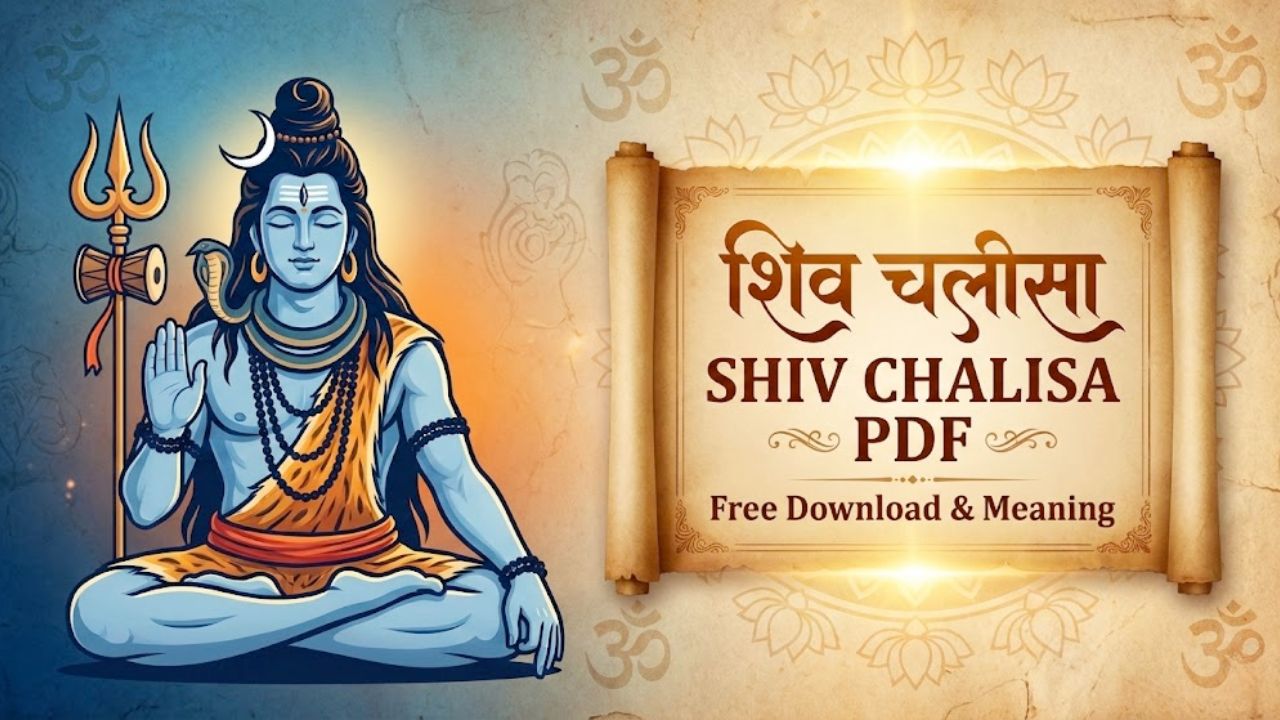
The Shiv Chalisa is a revered 40-verse devotional hymn dedicated to Lord Shiva, one of the principal deities of Hinduism. Rooted in ancient scripture and tradition, it is a powerful prayer believed to bring protection, peace, and prosperity to its devotees. This comprehensive guide provides not just the text but also a deep exploration of its history, significance, and the profound spiritual mechanics behind its recitation.
The hymn’s enduring popularity is evident in its widespread digital presence, from mobile apps with audio features to new musical renditions released as recently as 2024. Recited daily by millions and with special fervor during the holy month of Shravan and on Maha Shivratri, the Shiv Chalisa serves as a direct conduit for devotees to connect with the divine qualities of Shiva—the destroyer of evil, the compassionate ascetic, and the ultimate bestower of blessings.
The History and Significance of Shiv Chalisa
The Shiv Chalisa belongs to a rich genre of Hindu devotional literature known as Chalisa, which refers to a composition of forty verses (chalis means forty in Hindi). Its authorship is traditionally attributed to a saint-poet, a common practice in bhakti (devotional) traditions where the focus is on the message rather than the messenger.
The hymn draws its core theology and imagery from the Shiva Purana, an ancient text that narrates the legends and glory of Lord Shiva. It synthesizes complex philosophical concepts into simple, poetic verses, making the divine accessible to every seeker. Each verse is designed not merely for reading but for contemplative recitation, helping the devotee visualize Shiva’s form, remember his heroic deeds (leelas), and internalize his virtues.
Why is Kumbh Mela Celebrated Every 12 Years? The Complete Guide
The hymn opens with an invocation to Lord Ganesha, the remover of obstacles, a traditional start to any auspicious Hindu undertaking. It then proceeds to describe Shiva’s magnificent form—the flowing Ganga in his matted locks, the serpent around his neck, the crescent moon on his forehead, and his compassionate third eye. This detailed visualization (dhyana) is a key aspect of its practice, aiding in concentration and devotional absorption.
Complete Structure and Verse-by-Verse Meaning
Understanding the structure of the Shiv Chalisa deepens its recitation. The hymn is meticulously composed in Avadhi or a similar vernacular dialect, using a rhythmic meter called Chaupai, which makes it melodious and easy to memorize and chant.
The core 40 verses are bookended by introductory and concluding couplets (Dohas). The main body can be thematically divided into sections: praises of Shiva’s form and family, narrations of his divine interventions to protect the universe, and the devotee’s personal plea for liberation from suffering.
The following table breaks down the key thematic sections of the hymn:
| Section of the Chalisa | Key Verses (Reference) | Primary Theme & Devotional Purpose |
|---|---|---|
| Invocation & Salutation | Opening Doha | Seeks blessings from Ganesha and Shiva for a fearless and successful recitation. |
| Description of Divine Form | Verses 1-8 | Visualizes Shiva’s iconography to inspire awe, love, and focused meditation. |
| Narration of Divine Acts | Verses 9-20 | Recalls Shiva’s victories over demons (Taraka, Jalandhara, Tripura) to instill faith in his protective power. |
| Personal Supplication | Verses 21-30 | The devotee’s heartfelt plea for rescue from worldly troubles, affirming Shiva as the ultimate refuge. |
| Phala Sruti (Fruits of Recitation) | Verses 31-40 & Closing Doha | Describes the spiritual and material benefits granted to those who chant with devotion. |
The Phala Sruti is a vital component of many stotras. In the Shiv Chalisa, it explicitly states the rewards of sincere recitation, which include freedom from debts, fulfillment of righteous desires (like the birth of a son for the childless), eradication of sins from past lives, and ultimately, attainment of Shivaloka (the abode of Shiva). This segment reinforces the faith of the practitioner by outlining the transformative potential of the prayer.
Spiritual and Material Benefits of Reciting Shiv Chalisa
The Shiv Chalisa is more than a prayer; it is considered a spiritual tool for transformation. Its benefits, as described in the text itself and through centuries of believer testimony, operate on multiple levels—psychological, spiritual, and circumstantial.
At its core, the regular recitation is believed to invoke Shiva’s protective grace. He is hailed as “Sankat ke Nashan” (the destroyer of crises) and “Vighna Vinashan” (the removers of obstacles). Devotees turn to the Chalisa during times of fear, confusion, or hardship, seeking his intervention to clear their path.
The Main Languages Spoken in India: A Linguistic Tapestry of Diversity
Beyond crisis management, the practice cultivates positive inner qualities. The meditative repetition of verses calms the mind, reduces anxiety, and fosters a state of single-pointed focus (ekagrata). By contemplating Shiva’s attributes—his compassion for the downtrodden, his mastery over poison (symbolizing negativity), and his role as the destroyer of ignorance—the devotee is encouraged to embody these virtues.
The table below summarizes the key benefits as derived from the hymn’s own promises and traditional understanding:
| Type of Benefit | Description | Source in Tradition |
|---|---|---|
| Psychological Peace | Calms a restless mind, reduces fear and anxiety, instills courage. | Verses pleading for peace of mind (“bhramat rahou mohi chain na aave”). |
| Spiritual Purification | Said to erase the effects of past-life sins (karma), leading to liberation. | Phala Sruti: “Janma janma ke pap nasave”. |
| Material & Worldly Support | Helps overcome severe difficulties, financial debts, and legal problems. | Phala Sruti: “Riniyan jo koi ho adhikari…”. |
| Fulfillment of Desires | Grants righteous wishes (manokamna), such as progeny for the childless. | Phala Sruti: “Putra hin kari ichchha koi…”. |
| Ultimate Goal | Leads the soul to reside in Shiva’s divine abode after death. | Concluding verse: “Ant dham Shivapur men pave”. |
How to Recite Shiv Chalisa: A Step-by-Step Guide
To gain the full spiritual benefit, the recitation of Shiv Chalisa is traditionally approached with a specific procedure and mindset. It is not a casual reading but a devotional ritual (sadhana).
-
Preparation (Sankalpa): Begin by setting a clear intention. Sit in a clean, quiet space, facing north or east if possible. Take a moment to calm your mind.
-
Purification: Wash your hands, feet, and face. You may light a lamp (diya) and incense (dhoop) to create a sacred atmosphere. Offer a few drops of water, a flower, or a belpatra (leaf of the wood apple tree) to a Shiva idol or image if available.
-
Invocation: Chant the opening Doha with focus, sincerely asking for the removal of obstacles to your worship.
-
Recitation: Read or chant the 40 verses clearly and with feeling. Try to understand the meaning as you go, visualizing the forms and stories described. You can use a printed text, a PDF on your device, or follow along with an audio version.
-
Conclude with Aarti: After the final Doha, it is highly recommended to perform or listen to the Shiva Aarti (like the “Om Jai Shiv Omkara”) to complete the worship.
-
Regular Practice: For greatest effect, incorporate it into a daily routine (nitya karma), ideally during the peaceful hours of Brahma Muhurta (early morning) or at sunset. Regularity (niyam) is considered more powerful than occasional lengthy sessions.
Finding and Using a Shiv Chalisa PDF
In the digital age, accessing the Shiv Chalisa has become incredibly convenient. A search for “Shiv Chalisa PDF” will yield numerous websites offering downloadable files. When choosing a source, opt for reputable spiritual or cultural websites like SanskritDocuments.org or Vignanam.org, which provide accurate transliterations and translations.
A well-made PDF is an excellent tool for learning and practice. It allows for offline access, easy searching, and printing for personal altars. Many PDFs also include the original Devanagari script, Hindi transliteration, and English translation side-by-side, which is invaluable for those not fluent in Hindi.
Furthermore, the hymn’s popularity has spurred a host of digital companions:
-
Audio and Video Versions: Platforms like Gaana feature professionally sung renditions (some released in 2024) that can guide your melody and pace. YouTube hosts countless videos with on-screen lyrics.
-
Mobile Applications: Apps like “Shiv Chalisa with Audio” on Google Play provide the full text, audio playback, and sometimes related prayers like the Shiva Tandava Stotram, all in one portable format.
-
Music Platforms: Dedicated bhakti albums and singles of the Shiv Chalisa, sung by renowned artists, are available for streaming and download on major music services.
This digital proliferation ensures that wherever a devotee may be, the sacred verses are only a click away, preserving an ancient tradition through modern technology.
Conclusion: The Eternal Relevance of Shiv Chalisa
The Shiv Chalisa endures as a spiritual powerhouse because it addresses the timeless human yearning for connection, protection, and transcendence. It is a masterful blend of poetic beauty, theological depth, and practical devotion. More than just forty verses, it serves as a roadmap for the soul, guiding the devotee from the turmoil of worldly existence toward the peaceful abode of the Divine.
Whether recited from a printed book, a PDF on a tablet, or listened to via a smartphone app, its power lies in the sincerity of the heart that engages with it. In a fast-paced world, the daily practice of chanting the Shiv Chalisa offers a sanctuary of stillness, a reminder of a higher power, and a proven path to invite divine grace into one’s life. By integrating this ancient prayer into your routine, you tap into a living stream of devotion that has sustained and uplifted countless seekers for generations.